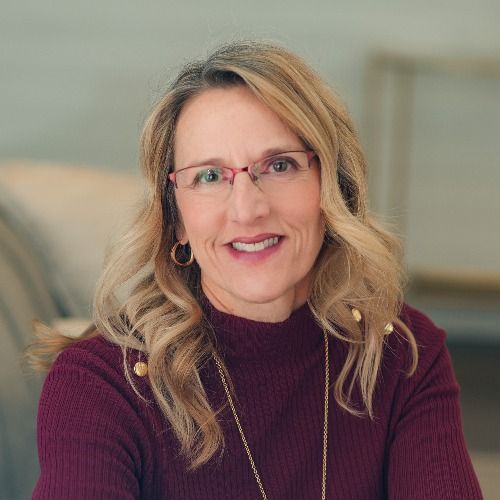
Believing Your Way Into Greatness with Tremale Delano
In this powerful episode of DunnWise Perspectives, Doris sits down with Tremale Delano to explore a story of resilience, identity, and the unexpected paths that shape who we become.
Tremale shares his journey from being passed through the foster care system in Los Angeles to building a successful career in construction and real estate management. Raised by a remarkable foster mother who believed deeply in the potential of every child, he was taught early on that his circumstances did not define his future.
But what makes this story truly unforgettable is the belief that drove him for years—that his biological father was a successful attorney who wanted nothing to do with him. That belief fueled his ambition, his work ethic, and his desire to prove something bigger.
Until he discovered… it wasn’t true.
In this conversation, Tremale opens up about:
- Growing up in foster care and the impact of unconditional belief
- The role of forgiveness in shaping his mindset
- How a powerful—but inaccurate—story drove his success
- What happened when that story unraveled
- Why life isn’t black and white—and how perspective changes everything
- The mindset shift from “one path” to discovering new doors
This episode is a reminder that even the stories we question—or outgrow—can still serve a purpose. And sometimes, the path we didn’t plan leads exactly where we’re meant to go.
Key Takeaway
- Your beginnings don’t determine your destination
- Beliefs—true or not—can shape your trajectory
- Mindset isn’t about avoiding setbacks, but reframing them
- When one door closes, another may already be open—you just have to look
- Life is less about certainty and more about perspective
About Tremale Delano
Tremale Delano is a storyteller who takes his audiences on a riveting journey of discovery, using cinematic storytelling and honest reflections to foster transformative thinking. His signature style has been shaped, in part, by competing in the annual Toastmasters International Speech Contest, where he most recently advanced as a semifinalist in the 2024 World Championship of Public Speaking. With a degree in architecture and nearly two decades of experience in commercial construction management, Tremale uses his unique builder’s mindset to bring conceptual ideas to life.
Connect with Tremale
- Email: tremalespeaks@gmail.com
- LinkedIn: Tremale Delano, LEED AP | LinkedIn
- YouTube: https://www.youtube.com/user/PoignantEnigma/videos
Connect with Doris
- Email: doris@dunnwise.com
- Website: www.dunnwise.com
- LinkedIn: www.linkedin.com/in/doris-dunn
- Schedule a Discovery Call: https://calendly.com/dunnwise-consulting/30min_discovery_call
Want to Be a Guest?
Have a story of resilience, reinvention, or overcoming a challenge? I’d love to hear from you.
👉 Submit your story here: https://forms.gle/gJWpVcsZ5wTwfAgSA
Transcript
Welcome to Dun Wise Perspectives,
a podcast about stories of
2
:resilience and shifting mindsets.
3
:I'm your host, Doris Dunn.
4
:My guests are leaders, entrepreneurs,
and everyday people who've navigated
5
:change, faced uncertainty, and
discovered new ways of thinking when
6
:life didn't go according to plan.
7
:If you're navigating a season of
change, feeling stuck or simply
8
:curious about how small mindset
shifts can lead to meaningful
9
:progress, you're in the right place.
10
:Let's get started.
11
:I.
12
:Doris: Welcome everybody to
another episode of DunnWise
13
:Perspectives, and today we have a
very special guest, Tramale Delano
14
:that I met through Toastmasters.
15
:And if you know anything about me,
I'm a huge fan of Toastmasters.
16
:I am the founder of the Franklin
Toastmasters in Franklin, Tennessee
17
:that began in the late 1990s.
18
:And I did leave the Franklin Toastmasters
and joined one in California, and then
19
:when I came back to Tennessee a few years
ago, I rejoined Franklin Toastmaster,
20
:and I've had the pleasure of hearing
Tramalel speak a number of times,
21
:and Tramalel is a fantastic speaker.
22
:And last year he competed in
the international speech contest
23
:and went quite a long way and
he is competing again in:
24
:And I have a pretty sneaky suspicion.
25
:I don't have a crystal ball, but I think
he's gonna go really far again this year.
26
:And he is again, an excellent speaker and.
27
:He not only is an excellent speaker,
but his stories are impactful.
28
:They draw you in.
29
:The rest of the world goes away
when Tramalel tells a story.
30
:And the last speech that he gave, which
is, the international speech contest,
31
:he's gonna go a long way with that speech.
32
:But when he shared that speech and.
33
:His background, I thought I
need to have him on the podcast.
34
:He has an incredible story and
incredible shift in mindset from
35
:the very, from very early age.
36
:That is something that everyone
needs to hear and so I am so excited
37
:to have Tramalel on the show today.
38
:Welcome, Tramalel.
39
:Can you share a little
bit about who you are?
40
:Just tell us a little bit about you.
41
:Tremale: Sure.
42
:Thanks Doris.
43
:It's a pleasure to be here.
44
:Thank you so much for having me.
45
:I spent most of my life,
in Los Angeles, California.
46
:I was born and raised in California
and came out to Tennessee in:
47
:my background professionally by
trade, I was in architectural
48
:design and construction management.
49
:I went to school in Washington, DC
and then hiked, tilted back to la.
50
:Avoid the snow, so to speak.
51
:But yeah, that's still a
large part of what I do.
52
:Construction, real estate management.
53
:But, i've developed a passion for
storytelling in public speaking because
54
:it has gone hand in hand as I've had
a lot more time now being an adult
55
:to reflect on my life experiences.
56
:it's been a very useful tool
to be able to share my story
57
:with clarity and conviction.
58
:And so it's been very helpful
and that's why Toastmasters has
59
:been helpful for me as well.
60
:Doris: I hear architectural design
and if someone says, yes, I'm an
61
:architectural design, the first thought
is I'm sure that your mother or a father
62
:must have been an excellent architect.
63
:And that is probably where you got your
desire and you were following in your
64
:parents footsteps in architectural design.
65
:And that couldn't be
further from the truth.
66
:tell us a little bit about your
early childhood and some of the
67
:struggles that you had from early on.
68
:Tremale: Sure.
69
:Yeah.
70
:there there's one fact
about me that always.
71
:Reminds me of my experience and that
is that no picture of me prior to two
72
:years old, as far as I'm aware, exists.
73
:The earliest memories that I have that
are photographed right now are all two
74
:years and above, because between my
birth and the age of two, I was being
75
:passed around through the foster care
system around in Los Angeles County.
76
:So my birth mother unfortunately
and this is something that.
77
:Still isn't in the headlines today
with, opioid crisis and drugs.
78
:But unfortunately my mother got caught
up in that in the eighties and had
79
:a challenge with drug addiction.
80
:And so I was born during
her struggle with that.
81
:And so after six months
of caring for me she.
82
:basically relinquished her
parental rights to my aunt.
83
:And then again, my aunt relinquished
her parental rights six months later.
84
:So there was just this period of
every six months, it felt like my
85
:caretaker or my mom was, returning
me back to the store, so to speak.
86
:Doris: tell me, how could a six
month old be so much trouble?
87
:Tremale: I can only imagine.
88
:But look looking at some of the reports
that I have that give me a little bit of
89
:glimpse into the history apparently I.
90
:Had effects from my mom's
usage when I was in the womb.
91
:I believe the reports noted that I
had fecal fetal alcohol syndrome,
92
:and apparently the, I think the
chief characteristic was I was
93
:described as an insolvable kid.
94
:So apparently I would cry for three
to four hours at a time and there was
95
:nothing that could be done to console me.
96
:Some doctors,
97
:Doris: you were probably
going through withdrawals.
98
:Tremale: Some doctors had speculated
that was exactly as you mentioned
99
:going through withdrawals from
alcohol that was put placed in my
100
:bottle to calm me when I was younger.
101
:But yeah it's hard to make sense of it,
especially now that I have two kids.
102
:And so I had this crazy experience when
I held my daughter for the first time
103
:when she was two years old, because it
was the first time that I saw an image.
104
:Of what I must have looked like.
105
:'cause she looked fairly similar to me.
106
:And I remember holding her one day and
looking at her and thinking, who in the
107
:world could let this little angel go?
108
:Yeah.
109
:And so I had that moment Just
trying to make sense of it.
110
:But I've made peace with it.
111
:I understand it and I understand it
through the perspective of how it's
112
:helped me become the person I am
today, which has been a long journey.
113
:But it's been a worthwhile one.
114
:Doris: Wow.
115
:And you shared with me before we hit
record that you, you have had an on and
116
:off relationship with your mom and she
has tried to come back in your life.
117
:Tell me a little bit about
the forgiveness or the.
118
:The inability to forgive her, the ability
to forgive or how did your mind wrap
119
:itself around the fact that she left,
then she came back, she left again.
120
:How do you manage through that?
121
:Tremale: Sure.
122
:So my foster mother, Ruth tha
Holbert, that was her name, the woman
123
:who not only took me in, but five
other foster kids, high risk foster
124
:kids that no one really wanted.
125
:She was a very, principled person, a very
spiritual person, a very religious person.
126
:And so very early on when I was
younger, the concepts of forgiveness
127
:and acceptance were embedded within me.
128
:She didn't take the route of
trying to hide that I was hers.
129
:I don't know when I found out that I
was a foster kid, but as far back as
130
:I can remember, as a kid I've known.
131
:So sh it was very important for her.
132
:To let us know as early as it was
practical given our developmental
133
:state where we came from, but intercept
that and also say, by the way.
134
:I still expect greatness out
of you, just so you know.
135
:Doris: Yeah.
136
:Tremale: So it's almost as if she reached
forward and tried to take away the
137
:possibility of us finding out that later
in, in that sense of worthlessness, that
138
:you feel where that people who brought you
into this world and want you, it's almost
139
:like she wanted to get that outta the way.
140
:So she could do the heavy lifting, which
is getting us to believe in the idea.
141
:That we could become more so she helped
to instill those ideas and my, my
142
:birth mother was forbidden by court
order, ever having any contact with me.
143
:When I was very young.
144
:There was a hearing but I believe I was
around in the 11th grade where my mom
145
:Ruth, then Hobert, my foster mom, let me
know that she had received a voicemail.
146
:She had explained to me like, Hey,
by the way, she's not allowed,
147
:but I'm gonna leave it up to you.
148
:It is your choice.
149
:Do you want to call her back or do you
want to email back, or what have you?
150
:And on the basis she
raised me forgiveness.
151
:I was like, sure.
152
:And so I remember writing her this email.
153
:She later described it brought tears to
her eyes because I came right out with it.
154
:I forgive you, and this is
without me even knowing the story.
155
:I forgive you, God always has a
plan, 'cause again, raised with
156
:that line of thinking when I was
younger and that opened the door.
157
:But, we're all human.
158
:And ultimately after the adrenaline
rush of of a new experience, you
159
:start to get to know people and you
have to make a decision on, what is
160
:gonna best support your future growth.
161
:And so that's been something I've had
to wrestle with as my mom continues
162
:to wrestle with, the struggles of her
past, which continue to be ongoing.
163
:Doris: Yeah.
164
:Tremale: So it's a work
in progress, shall we say.
165
:Doris: So I wanna talk
about Ruth Ann for a minute.
166
:you said she took in five foster children
and it sounds like she six, including
167
:Tremale: me.
168
:Doris: Six.
169
:So five other fosters.
170
:So she was raising six
between the ages of what?
171
:Two to four ish?
172
:Tremale: As young as him.
173
:Infant Six months.
174
:Doris: Yeah, six months.
175
:Tremale: Younger.
176
:Younger.
177
:Doris: So really young kids.
178
:And she instilled in you this,
I expect greatness out of you.
179
:Do you think that she saw greatness
in each one of you, or she didn't
180
:really care what your background was?
181
:She just knew that there was
potential in every single child
182
:that was living under her roof.
183
:Tremale: it was the latter.
184
:My mom just believed in, in the
idea that everyone has potential.
185
:I don't care where you come from.
186
:If you were to look at our rap sheets,
but, and if, and if you even look at
187
:our life experiences, early on it, none
of it suggested that we would at all.
188
:Follow a trajectory because we came
with some pretty heavy baggage,
189
:but she just had this belief.
190
:She loved kids.
191
:She had daycare and, before us there
were many other foster kids that
192
:she had temporarily, for years.
193
:she's probably from a span of her life,
had 10, 12, 15 kids directly in her care.
194
:And then she had daycare, so she just had
this firm belief around what can happen
195
:when you instill love and care within a
kid that it can allow, someone to nourish.
196
:And she certainly tried to instill
that within us to the best she could.
197
:Doris: Where do you
think she got that from?
198
:Where did she learn that,
or, what made her so special?
199
:'cause you hear terrible things about.
200
:the foster system and foster
parents and some people doing it
201
:just for the money and obviously
this, that she did it differently.
202
:What made her so different and what
were other success stories besides you?
203
:Tremale: Sure.
204
:Yeah.
205
:It, I think it comes from her
deeply rooted spirituality.
206
:She saw this as her calling.
207
:To take the kids that no one thought
had a chance, and almost to show the
208
:world Hey, don't give up on these kids.
209
:And Hey, just so we're clear, I'm
gonna show you, I'm gonna give
210
:you the roadmap, so I'm gonna
take the kids nobody wants, right?
211
:And I'm gonna keep 'em even when they
break my heart over and over again.
212
:I'm gonna show them the power
of love and the power of
213
:commitment and consistency and.
214
:It wasn't just me, so my brother
Johnelle even in high school, he was
215
:considered a world renowned pianist.
216
:He was doing music concerts
all over the place, competed in
217
:international music competitions.
218
:In high school, but that was my mom.
219
:she put all of us in music lessons.
220
:Some took to things so that some of
the girls were in ballet piano lessons.
221
:So the arts were a big part of,
what she felt was important because
222
:it was a form of expression.
223
:My other sister went on to
college and nursing school.
224
:So a lot of us have had success
that kind of belie the standard
225
:trajectory of our peers.
226
:And I think it, a lot of it has to do
with the manner in which she raised us.
227
:And
228
:Doris: yeah,
229
:Tremale: I don't mean to understate
the difficulty with which it took
230
:for us to get to where we were but.
231
:It certainly stands out as a
differentiator when you reflect back
232
:Doris: Yeah.
233
:Tremale: The values that she instilled.
234
:Doris: I wanna talk about one of those
values, 'cause you shared earlier with
235
:me what happened when you and your
brother would get into a fight and
236
:the punishment that she instilled.
237
:And I love this story and I'd love for
you to share what your punishment was.
238
:Tremale: Yeah, so my mom is what I
would call an innovative punisher.
239
:She had some very unique methods
One of her go-tos was, some parents
240
:will have you write standards.
241
:She would often make me go write
pages and pages out of a dictionary.
242
:She'd make me find words and write
the definition of them on paper
243
:as an alternate form of standards.
244
:Make me go take the Bible and write
out pages and pages of Bible verses and
245
:come back and let's go talk about it.
246
:I don't want you to, I want you to
keep writing until your hand feels like
247
:it's gonna fall off, but the biggest
one is I remember one time me and my
248
:brother got into a pretty bad fight
and as punishment, she made us figure.
249
:out What bus we needed to take
to get to a library 30 minutes
250
:away in a whole other city.
251
:And we had to go together.
252
:We had to go find a book, read it,
write a book report, and we could not
253
:come back home until we had it in hand.
254
:And I remember that moment specifically
because we got lost so many times W e
255
:literally had to put our differences
aside and work as a team to try to
256
:figure out how to get back home, and
know In her grand wisdom of things.
257
:Yeah, I didn't just get a
book report out of that.
258
:I I got some way finding
navigational skills out of it too,
259
:Doris: oh, absolutely.
260
:Oh my goodness.
261
:So I wanted, so to call it
your architectural designer.
262
:And what inspired that?
263
:How did you go from, the foster care
system, you graduated from high school.
264
:you found yourself in college,
in Washington, dc What
265
:inspired architectural design?
266
:Tremale: I grew up in
South Central Los Angeles.
267
:A lot of the residents there often would
do their own home additions often, and
268
:so I happened to live next door to a
gentleman who was also a carpenter.
269
:And so there was something about.
270
:Buildings had always boggled my mind.
271
:It felt like magic.
272
:How can one day there be nothing there?
273
:And then all of a sudden there's
this structure standing there
274
:and the wind for the most part,
Los Angeles can't knock it down.
275
:It keeps you out of the weather.
276
:And it's a place called home.
277
:So it buildings were like a marble to me.
278
:And I remember one day, I was
watching him build something 'cause
279
:I would just ride my bike around the
neighborhood and just watch people build
280
:things for hours and get lost in it.
281
:One day I had the courage to go up
to him and I said, you know what?
282
:I had to be, I had to have been
in the seventh grade, sixth grade.
283
:I said, I want to be just like you
when I grew up, and he was a carpenter,
284
:and he came over to my house and
he sat on the porch next to me.
285
:he laughed and he said I'm very flattered,
but you don't want to be like me.
286
:Trust me.
287
:Let me tell you what you should do.
288
:What you should do is go be an architect.
289
:And what they do is they build
things, but on paper and.
290
:It'll be great for you.
291
:And the secret is when you turn
40, your knees will still work.
292
:So every, ever since I was there that
age, I decided that's what I wanted to do.
293
:So from literally around the sixth
grade, I knew what I wanted to do and,
294
:got it, got accepted into the School of
Architecture at Catholic University in
295
:Washington dc successful internships.
296
:But then just through all the
professional experience, I decided
297
:to take a intermediate track.
298
:And so instead of.
299
:Becoming a professional architect
and becoming a licensed architect, I
300
:pivoted into commercial construction
management, and so I became part
301
:of the teams that helped build the
buildings and manage the buildings,
302
:but not necessarily with my hands.
303
:Yeah,
304
:Doris: it's
305
:Tremale: the scheduling, the
budgeting the logistics of it all.
306
:I discovered that I had
a great passion in the.
307
:The dynamic nature of that experience.
308
:And that's what I have spent the last
20 years of my life primarily doing is
309
:bringing commercial projects to life.
310
:Doris: I love it.
311
:You said something earlier
that kind of stuck with me.
312
:You said something about
the building being a home.
313
:I wonder if there's some symbolism there
where you had a wonderful home and a
314
:wonderful foster mom that took care of
you, but I'm sure in the back of your
315
:mind there was a little bit of niggling
about, this is a wonderful home, but.
316
:I wanna build my own home, I
wanna build a home with a family.
317
:do you think that there's some
symbolism in this architectural design
318
:and this, looking at your neighbor
and seeing him build something and
319
:saying there's something magical about
it and the building becomes a home
320
:and the home is where the family is.
321
:And I just wonder if that somehow ties
together from a symbolism perspective
322
:and where you wound up making the
decision to, to start your career.
323
:Tremale: That's a great thought
for some additional reflection.
324
:I've actually never ever considered that.
325
:But there, there could be some
credits there, credence there to that.
326
:I, I was allowed to wonder, when I was a
kid, I was allowed to be a kid in, in a
327
:lot of different ways, and I think that.
328
:Letting that curiosity kind of
roam, starting with just playing
329
:with Legos and taking things apart.
330
:I got into so much trouble taking things
apart and trying to put 'em back together.
331
:Vacuum cleaners.
332
:One day I got it in my mind that I
was gonna take the motor out a vacuum
333
:cleaner and putting in my wagon,
and I was gonna make a go-kart.
334
:I want you to imagine how that
went ruined their vacuum cleaner.
335
:But I,
336
:Doris: it sounds like that sounds
like something my husband would do.
337
:Tremale: Yeah.
338
:Yeah.
339
:So I think that it was certainly
influenced by the environment
340
:that my foster mom created that
allowed me to just explore.
341
:And who knows, maybe the roots do lead
back to, at the end of the day, everyone
342
:wants a shelter, a place called home.
343
:And maybe that's probably a, a deeper,
concept that sort of resided within me,
344
:Doris: so tell me about the
speech that you're writing now.
345
:I, we, I know we spent a little bit
of time talking about your mom and
346
:the speech that I had the pleasure
of just listening to, talked a
347
:little bit about your dad and Okay.
348
:Spoiler alert.
349
:We, I know from the
speech that you thought.
350
:This one person was your father
and it inspired a lot of who you
351
:became, and later you discovered
that someone else was your father.
352
:Can you share a little bit about that?
353
:What inspired you knew you were
gonna be this one person because
354
:your dad was an attorney, right?
355
:And then when you were discovered
your dad was someone else what
356
:process happened in your mind?
357
:And then how did you keep your
original dad as part of who you are?
358
:Tremale: Sure.
359
:So growing up we talked a
little bit about my mom.
360
:So the flip side is that my dad,
at least the man at the time that's
361
:named on my birth certificate he
was married to another woman at
362
:the time that, I was conceived.
363
:And so the story that was told to me
very young is that while my foster mom.
364
:And a lot of people around me
were aware of who my dad was.
365
:He had legal advertisements
that played on tv.
366
:His family was known personal injury,
I believe some type of in that
367
:legal sense, and that legal sphere.
368
:But it was made clear to me that they
didn't wanna have anything to do with me.
369
:Forbidden fruit, I don't
fit in the profile.
370
:And so from a very young age,
I knew about him, but there was
371
:almost this deep resistance.
372
:So when I found out that, my dad
was this brilliant attorney that
373
:kind of stuck with me and my mom
went off and tell me, Hey, just so
374
:you know, you come from brilliance.
375
:Don't forget that, she'd remind me
in a bunch of different contexts and.
376
:It almost became a rally cry for
me if they don't want me, I'm
377
:gonna become so big one day that
they're gonna come looking for me.
378
:there was this like dichotomy of I'm
gonna take your superpower, right?
379
:Your brilliance that I inherited
you, didn't give it to me.
380
:I have it, but I'm gonna use it to
become bigger than what you ever
381
:thought, and so it was this thing where.
382
:I found belief that I could become
something because of my background, my
383
:history, who the people, I thought the man
who I thought was my dad, but also being
384
:driven by this desire to prove them wrong.
385
:And so there was this healthy, there
was like this partial acceptance of
386
:what they gave me, but this rejection.
387
:Of ever being, with them.
388
:I imagined these moments where, I designed
this big skyscraper and my name is on it,
389
:and they come to the grand opening and
they wanna shake my hand and I say, no.
390
:I'm rejecting you now.
391
:There's just those kind of kid fantasies.
392
:And so I, that, that drove a lot, a large
part of my identity when I was younger.
393
:And I certainly needed something
to drive me because I had a whole
394
:bunch of educational challenges.
395
:Dyslexic was placed in
special education classes.
396
:To the point that, I was pretty
significantly behind in school and so
397
:things clicked and life started to come
together through, a huge part of my
398
:foster member supporting my development.
399
:And my life was playing out just as.
400
:I landed, I graduated, I found success.
401
:I was building high rises,
not high rises that I owned,
402
:but I was building high rises.
403
:I got to a point where I was
building my own buildings mid-rise
404
:buildings that were, that was
gonna put my daughter's name on.
405
:So that fantasy that I have is a kid
was starting to come true until my wife.
406
:Did something that kind of just blew
up my whole world and she told me that,
407
:Hey, just so you know, I've been like
looking into your dad's family and I
408
:know you don't want to, and I know I
ask you, but I saw an article about
409
:like how your dad died and so that set
us off on this whole thing and then.
410
:When she got pregnant with our first kid,
that made me completely start to rethink
411
:my relationship with my past and my dad.
412
:And, my wife's perspective was always,
maybe the story you told wasn't true.
413
:Maybe they've evolved, maybe there's
younger cousins and brothers and sisters.
414
:You never know.
415
:I want our kid to, experience that.
416
:Because I grew up on family.
417
:My wife did.
418
:Family was very important for her and
she didn't want me to be robbed of
419
:that, and she wanted our future kid to
be robbed of that experience either.
420
:And so COVID, COVID times, and it
did not take very long for me to.
421
:Pierce through and find them.
422
:It wasn't very hard with all the modern
technology and it turns out that I
423
:found them and just as my wife had
explained or hoped they were accepting
424
:and they wanted me to be a part of it.
425
:And we did a DNA test on the same day
and it turned out that it wasn't true.
426
:And so I had my whole life.
427
:And it wasn't just this idea that
my dad's brilliance came from me.
428
:It was this whole drive
of proving them wrong.
429
:I didn't have anyone to prove wrong
anymore 'cause it wasn't true.
430
:But my wife being the eternal
optimist that she is, she's Tramell,
431
:do you know what this means?
432
:No, it means your dad
might still be alive.
433
:And I'm like, whoa.
434
:She went on this journey for about
a year trying to figure it out.
435
:And she found my real dad.
436
:She did over the course of a year.
437
:And it helped me resolve
some things about myself.
438
:And I think the biggest thing that
this experience showed me is that Wow.
439
:Okay, so I have to process this.
440
:A lot of my advancement in life,
I attribute to the fact that my
441
:dad gave me, gifted me certain
abilities and was driven by this
442
:idea that my family didn't want me.
443
:So I had this extra drive, but
it turned out to not be true.
444
:And so I was trying to reconcile that
and at the end of the day, where I
445
:landed at, was just an appreciation
that I am where I am today.
446
:No matter how I got here, there
was this deep appreciation for a
447
:moment that, wow, it's crazy that I
would not be here if not for those
448
:misunderstandings and lies, right?
449
:That I believed and it
completely changed my mindset.
450
:To really start to look into this
concept that life is not black and white.
451
:It's gray, it's messy.
452
:It doesn't fit on neat little posters.
453
:It, it's pages and pages of
contradictory information that
454
:you have to take in as a whole.
455
:But if you do that,
you'll be given a gift.
456
:And that gift is a gift of
perspective and realizing that.
457
:All of it came together
to make you who you are.
458
:And so that's been a huge mind shift for
me mindset shift for me as I've grown.
459
:Yeah.
460
:Doris: the thing that's so interesting
about that story and that I think I
461
:want our listeners to understand is
that the mind is incredibly powerful
462
:and you can, especially if you.
463
:Instill something in your children or
your foster children like you had in
464
:your case, and everyone believed it.
465
:They believed it so much
that you made it true.
466
:It turned that, like you said,
if you didn't have that belief,
467
:who knows where you'd be today?
468
:Who knows what you would've believed?
469
:I still strongly believe that your
foster mom would've still said,
470
:you're destined for greatness.
471
:She wouldn't have cared what your
history was because she had so much.
472
:Belief in you, but there was still
a part of that story that made you
473
:want to strive, made you want to
move forward, made you want to prove
474
:something to the family that you
thought was your real family and.
475
:That the mind is, oh, so incredibly
powerful that it can achieve things that
476
:maybe other people think we can't achieve
or parts of us think we can't achieve.
477
:And at the end of the
day, we can achieve it.
478
:And I don't know if maybe you wanna speak
to that a little bit and you we spend a
479
:little bit of time on mindset, but given
how you are today and the person that you
480
:are today, how has mindset maybe shifted?
481
:What your future could look like or
what you think, how you think about
482
:mindset in the decisions that you make
today or how you raise your children.
483
:Tremale: Sure.
484
:Absolutely.
485
:It's actually a little annoying
because I, it's almost like I've become
486
:depression resistant, shall I say?
487
:If that's a word.
488
:Sure.
489
:Doris: We'll, just we'll say it's a word.
490
:Tremale: Yeah.
491
:If it's a word, yeah.
492
:even when I have moments of
extreme disappointment and
493
:of things, disappointment
494
:Doris: in yourself, or disappointment.
495
:Tremale: Disappointment
in life in general, right?
496
:I wanted this certain result.
497
:I wanted to have this done by the
end of the year, or this really
498
:bad thing just happened to me
in life, and it feels so unfair.
499
:Why me?
500
:Why me?
501
:After the, the initial moments of that.
502
:There is always this place that
comes to me that says, okay,
503
:Tramale these doors have closed.
504
:Where's the hidden door that just opened?
505
:You gotta find it, right?
506
:Doris: Yeah.
507
:Tremale: And so my, I don't see the world
in this duality where it's either you made
508
:it or you didn't, you won or you lost.
509
:It's hey.
510
:This door just slammed shut.
511
:Look for the other door.
512
:There's gotta be another door somewhere.
513
:Doris: There's always another door.
514
:Yes.
515
:Tremale: That journey of where is it?
516
:Where is it?
517
:Is it, there's it there?
518
:Is it in the ceiling?
519
:Do I need to teleport outta here?
520
:Can I teleport?
521
:You, when you accept this idea that not
it's, I don't have the belief necessarily
522
:that all things happen for a reason.
523
:But I do think, I do
believe in cause and effect.
524
:I believe that when one thing happens,
it causes something else to happen.
525
:And your mindset is what allows you
to keep the story going and I, yeah,
526
:Doris: the butter, the
butterfly effect, right?
527
:Tremale: Sure.
528
:Yeah.
529
:So that's really been the biggest change
is that it's made me super curious to
530
:make sure that I didn't miss anything.
531
:Hey, am I looking at this the wrong way?
532
:I know this is, this might be what I want,
or, like last year I really wanted to
533
:speak to a bunch of different audiences,
but the speech that I wanted to give.
534
:Here I am a year later, and I realize that
there's so much more depth to explore.
535
:There's a better, bigger
story to tell, right?
536
:You have that perspective.
537
:You start to understand the life as
always, this work in progress and if you
538
:can find a way to just enjoy that period
of improvement and your hopes are up,
539
:your hopes are down, and then new hope.
540
:You'll always be moving
forward in some way.
541
:So that's probably been
the biggest shift for me.
542
:Doris: I love that.
543
:Tremale: And I didn't grow up like that.
544
:I it was hard for me to not see
it that way 'cause it was very
545
:kind of single track minded.
546
:And this is my go.
547
:I have to hit it.
548
:Failure's not an option, I have to hit it.
549
:So if I gotta run a hundred times, I'm
gonna run a hundred times and I'm gonna
550
:hit my goal, now it's more like, all
right, I keep running into the wall.
551
:Maybe I should look the
other way to see if,
552
:Doris: yeah,
553
:Tremale: this is where I should be going.
554
:Doris: Kinda, yeah.
555
:I love that,
556
:a
557
:Tremale: different type of commitment.
558
:Doris: But I agree.
559
:Everything has a cause and
effect, and I do the same thing.
560
:I think about my past and did I
make wrong decisions in some ways.
561
:And I realize, you know
what, every decision was made
562
:for a reason, whether it.
563
:It felt, or it feels today like what
if I had done something different?
564
:I, I might not be here
speaking with you today.
565
:If I had gone in any different
direction, again, that butterfly
566
:effect, that tiny little flap of a
butterfly's wing can impact things
567
:that we don't even know or understand.
568
:And I think that we can try to
move forward in a positive way,
569
:but I think that's a great analogy.
570
:If you keep hitting the wall that
maybe that 90th time is realized that
571
:maybe I do need to take another path.
572
:Maybe the path that I thought
was really clear in front of me.
573
:Isn't as clear and I need to
go find even that third door.
574
:I know there is, and I don't remember who
said it, I read it in, in a book, but it
575
:was by a, a Kathy Heller book, but she
was quoting someone else who talks about
576
:the third door, where the first door
is where everyone standing in line and
577
:you're waiting just imagined, trying to
get into a popular nightclub and you're at
578
:the back of the line and you're watching
VIPs go in front of you and you're just.
579
:Standing back there waiting and
hoping that you can get in the door
580
:that you may never even get in.
581
:And then there's a second door that
is a little less popular, but it's
582
:still, you can get through that
door, but you people forget about the
583
:third door that's hidden that maybe
you don't even realize is there.
584
:And I think what you just talked about,
the analogy of finding a different door.
585
:And don't try so hard towards something
that you think is the right path.
586
:Maybe it is, maybe you do need to
just keep trying and plugging away,
587
:but if you keep hitting a wall, maybe
try a different door or try a window.
588
:Tremale: Absolutely.
589
:I liken it to.
590
:I'm a big, I love sweets, right?
591
:So I love ice cream and I love
cookies, And the way I think
592
:someone really explained it to me
is I you love ice cream, right?
593
:Tramale?
594
:Yes.
595
:I love it.
596
:I love chocolate ice cream.
597
:But, have you ever had chocolate ice
cream with all these different toppings
598
:and all these different flavors?
599
:So it's really, you have in your
head what you think you like
600
:until you see something that is.
601
:More nuanced, more more ingrained
something more grand and it shifts you.
602
:And then you start to think and
question yourself of do I want
603
:this because it's what I'm destined
or do I want this because it's
604
:the only thing I know right now.
605
:And really giving yourself the grace to.
606
:To acknowledge that maybe you don't
know everything there is about you.
607
:Yeah.
608
:And, finding out the rest is a journey.
609
:So that, that's been a helpful
perspective for me to have as well.
610
:Doris: Yeah, and obviously
we're all on a journey.
611
:It doesn't matter how old or
how young we are, we're all on a
612
:journey, this journey called life.
613
:And I just, I wanna thank you so much,
Jamel, for sharing your story with me.
614
:I think it's so powerful
and I am so happy.
615
:That you are not one of the statistics.
616
:I know we talked earlier about the
statistics of foster care children
617
:and I wish we could wave a magic wand.
618
:I wish we could do something to,
I wish we could have a thousand
619
:Ruth Ann Halberts, and that's who
takes care of all the foster kids.
620
:Is all the Ruth Anns out there.
621
:And because we know that if a million
Ruth Anns took care of foster kids,
622
:we wouldn't, it wouldn't be that
trail of foster care to prison and
623
:some of the other paths that go on.
624
:And I'm just so happy that
you had the mother, the foster
625
:care mother, that you did that.
626
:Told you couldn't fail.
627
:You're destined for greatness.
628
:And she was 100% right that you
were destined for greatness.
629
:You hit greatness.
630
:You continue to find greatness
and I am glad that I am able to
631
:call you friend and I look forward
to hearing many more speeches.
632
:'cause I know there's a lot more
creative juices flowing in speeches
633
:that you're gonna give in the future.
634
:And I I can't wait to see
you on a big stage one day.
635
:Tremale: I appreciate that.
636
:And it's just been a true honor and
privilege to count you as a friend.
637
:So thank you so much for
everything and for having me today.
638
:It's been great.
639
:Doris: Thank you, Tramell.
640
:Thank you for listening
or watching this episode.
641
:If something from today's conversation
resonated with you, I'd love for you
642
:to share this episode with someone
who might need it or take a moment
643
:to reflect on what stood out for you.
644
:You can find show notes wherever
you get your podcasts, and if you
645
:enjoy the podcast, subscribing
or leaving a review helps more
646
:people find these conversations.
647
:Until next time, keep learning.
648
:Stay curious and remember,
sometimes a small shift in
649
:perspective can change everything.